
Tap the Real Strength of a Website Strategy: How to Create a Platform to Shift the Entire Race
Most voters will search for a candidate online before they ever attend an event or see a yard sign. That moment is a huge opportunity, but too many campaigns waste it with a website that does little more than prove they exist.
A site that functions like a static brochure is not enough to help a candidate compete with an incumbent or a well-funded opponent. It sends voters back to noisy social platforms and forces the campaign to depend on paid ads just to be noticed. Without a plan to grow into a communication hub, the website becomes an early purchase that looks useful but delivers almost no return.
When a website is built as a communication hub, it becomes the one place where a campaign can deliver clear information, track what resonates, and keep voters focused. It also gives an underfunded challenger a way to compete with a well-funded or incumbent opponent by creating structure, consistency, and a central source of truth.
A communication hub helps a campaign build momentum in a manageable way. It keeps messages organized and ensures voters see clear, consistent information. The following breaks down how a communications hub works and how it gives challengers the ability to close the gap.
Over-relying on Social Media Handicaps Campaigns
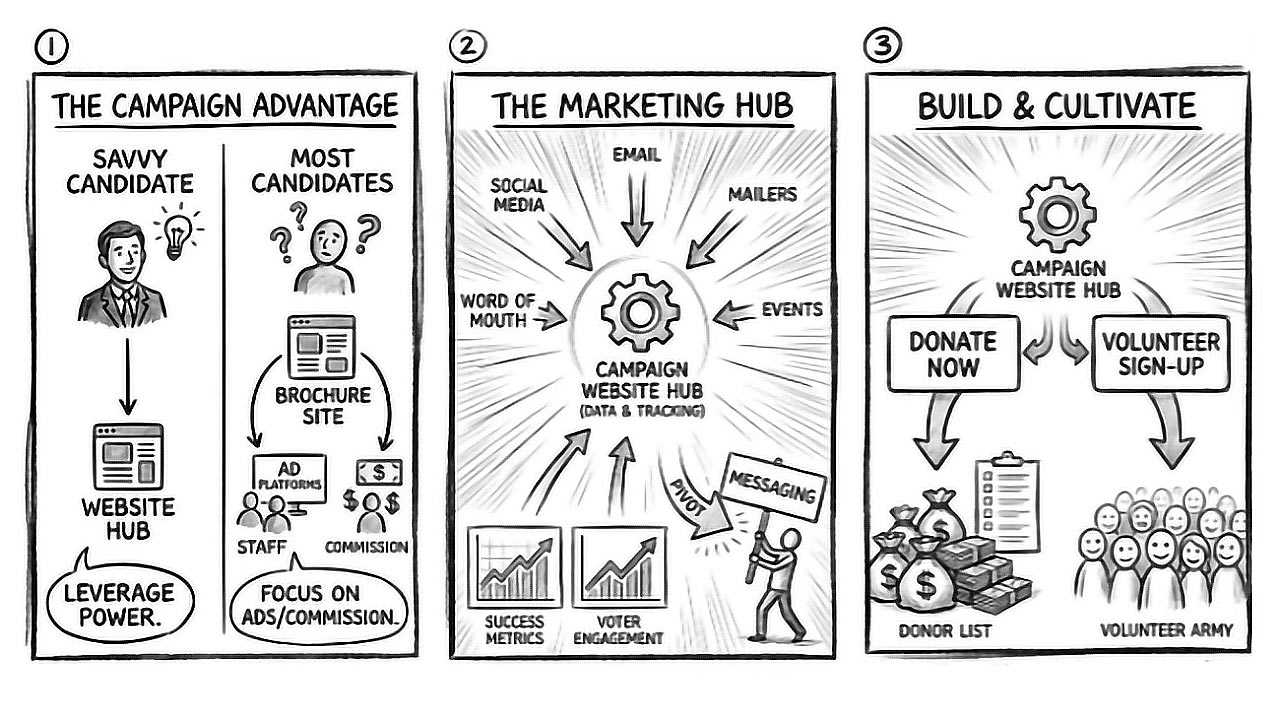
Most candidates default to social platforms for everyday communication, with Facebook being the most common. It feels familiar and easy to update. The problem is that social feeds are built for noise. Posts get swallowed by unrelated content, recommended videos, and endless scrolling. A voter may stop by for an update, then quickly drift away into a completely different conversation.
On top of that, platforms limit how many people actually see each post. Even when someone follows a candidate, they often see only a small portion of new posts due to algorithm limits. Important information competes with viral jokes, local drama, and national news, which makes it tough for a campaign to keep its message in front of supporters.
The Limits of Brochure-Style Websites for a Political Campaign
A typical campaign site includes a short bio, three or four issue paragraphs, donate button, and little else. It is static and light on details. Visitors can learn the basics but cannot do much more than that. These sites rarely include data tools or organized information, so campaigns get no real insight into what people care about. (And many incumbent candidates never make it a priority to find out; a weakness that a challenger candidate can exploit.)
Because brochure websites are not communications hubs and lack depth, people revert back to social media to follow updates. That pushes voters right back into the same noisy environment a successful campaign needs to rise above.
How Consultant-Driven Ad Strategies Waste Campaign Funds
Consultants often push candidates toward advertising channels that provide commissions or kickbacks for them. Television, radio, and digital ad buys regularly bring in revenue for consultants. This influences what marketing recommendations a campaign receives. When the budget tightens, many consultants step away because continued support is no longer profitable.
This leaves campaigns with short-term gains that fade quickly. They may get a bump in visibility, but they have not built the kind of long-term asset that helps with sustained outreach. The website, which could have been the center of communication, remains underdeveloped, under-utilized.
The Website as the Central Marketing Hub
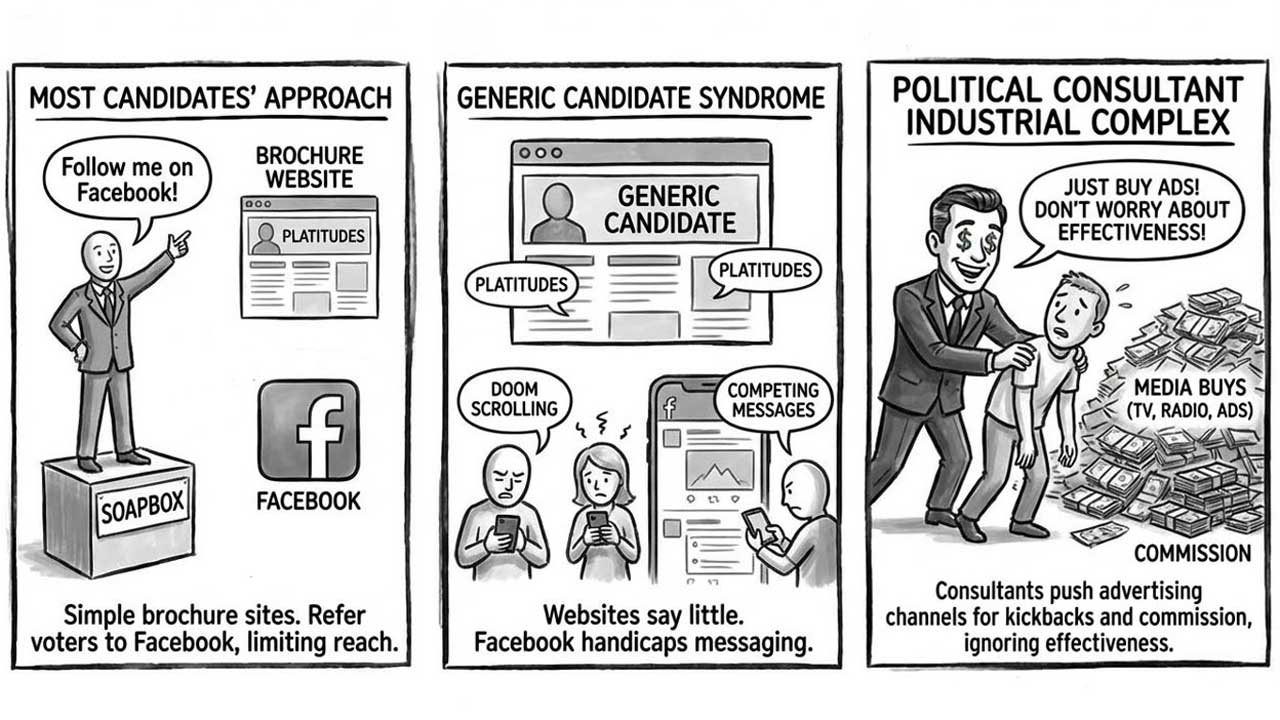
A political campaign website strategy built around a communication hub solves these problems. It becomes the home for everything a campaign wants voters to understand. Instead of being a static page, it turns into a central command system for messages, updates, education, volunteer activity, event promos and traffic from every other platform.
A marketing hub brings all communication into a single location. Whether a message starts on social media, in an email, at an event, or in a printed mailer, it leads people back to the site. Voters get clear, organized details without being bombarded by the competitor’s messaging.
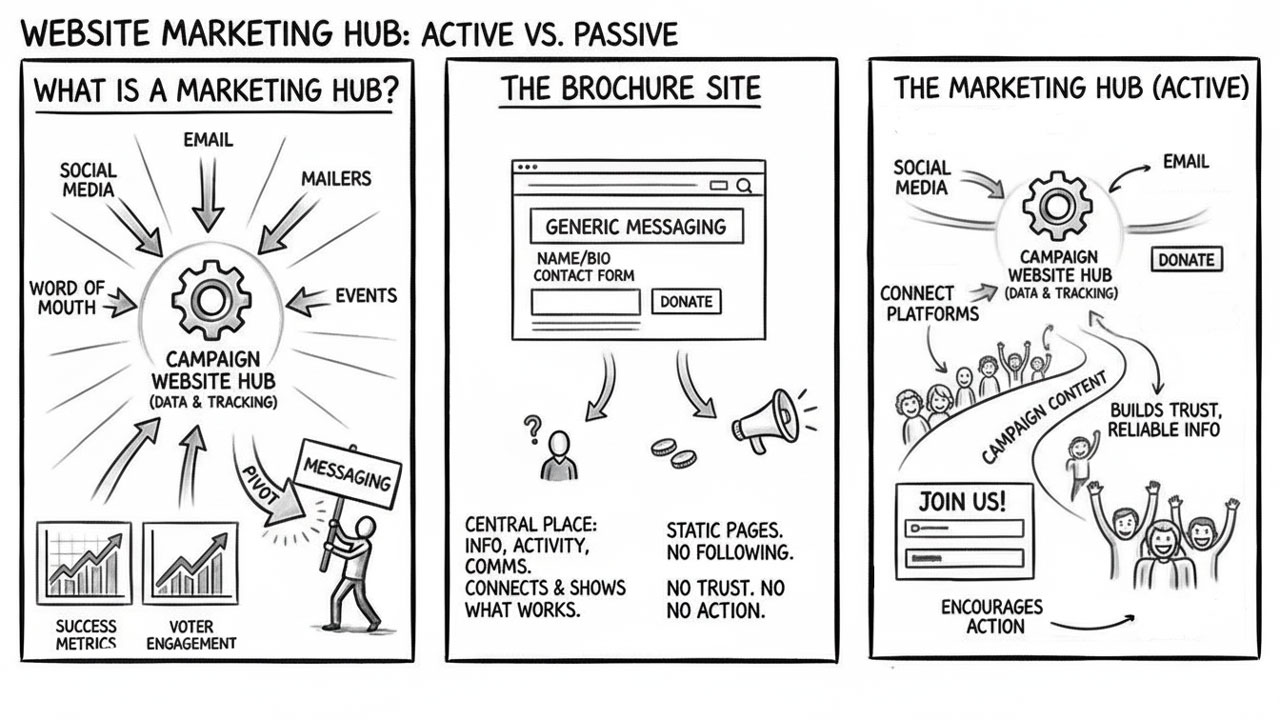
Brochure Website vs. Marketing Hub
Disadvantages of a Brochure Website
- Offers only basic information
- Doesn’t build trust so visitors rarely take any action
- Provides no insight for campaigns into what people read or care about
- Fails to track visitor behavior or engagement patterns
- Leaves voters vulnerable to competing messages on other platforms
- Does not support long-term organization or outreach
- Reliance on social media makes it hard for voters to share information beyond the walls of closed platforms
Advantages of a Website Communications Hub
- Campaign has 100% control over messaging
- Tracks which pages visitors view and how they interact with content
- Shows where voters stay engaged and where they lose interest
- Reduces distractions by keeping visitors inside the candidate’s message
- Helps refine messaging based on real audience behavior
- Encourages useful steps like signing up, donating, or learning more
- Supports steady growth of a deeper and more organized audience
- Easy for voters to share and reference information with others.
How a Marketing Hub Works
Building a hub starts by pointing every outreach effort back to the website. Social posts, email newsletters, event reminders, and printed materials all link to clear, organized pages. This builds a consistent path for anyone who wants to learn more.
The site groups information in simple sections, making it easy for visitors to move through updates, issues, background details, or event announcements without confusion. Pages are designed in a way that encourages deeper reading.
Tracking tools show which topics draw interest. When a particular issue page gets more visits, the campaign knows to expand it. When another topic gets ignored, the campaign can rewrite it, reorganize it, or drop it altogether. This makes the site a learning tool that improves communication over time.
Clear forms and buttons guide people toward taking the next step. The site helps turn curiosity into action, whether that means attending an event, signing up to volunteer, or offering support.
Benefits of Using a Website as a Hub
A well-built website for a candidate keeps information in one place where voters know they can find it. It keeps visitors focused instead of losing them to unrelated posts and suggestions.
Consistent links from every channel create a unified message. A voter who sees a social post, a yard sign, or a printed mailer will always know to go to the same home base for accurate details.
Hub sites also reveal what people pay attention to. Real behavior shows which pages drive interest, which makes it easier for a campaign to refine its messaging.
The hub supports organization by collecting signups and volunteer responses in a clear system. It becomes a stable space where the campaign grows its donor base and contact lists.
Important pages like blog posts and position statements can be saved and shared easily. Each page has a simple URL that people can bookmark, reference, or send to others.
Over time, the site becomes a long-term asset. It keeps a record of updates, achievements, and community involvement that continue to support the campaign even after election season.
A Website Communications Hub Is the Smartest Move You Can Make: Build a Resilient Volunteer Army and Boost Donations Faster, Better
When a website works as a communication hub, it becomes a powerful engine for growth. Campaigns often see three to five times more volunteer signups and more than double the donor dollars.
A hub also keeps the campaign focused. Tracking tools highlight what matters to supporters, while structured information make it easy to guide people toward the next step. The system creates momentum independent of ad budgets or incumbency advantages.
Ask yourself, does your campaign website provide a clear message that separates the candidate from the competition? Or does it echo generic talking points that would work any candidate’s website? Does it build trust with reader that optimizes volunteer signups and donations? Or is it merely a box checked off on the campaign’s to do list?